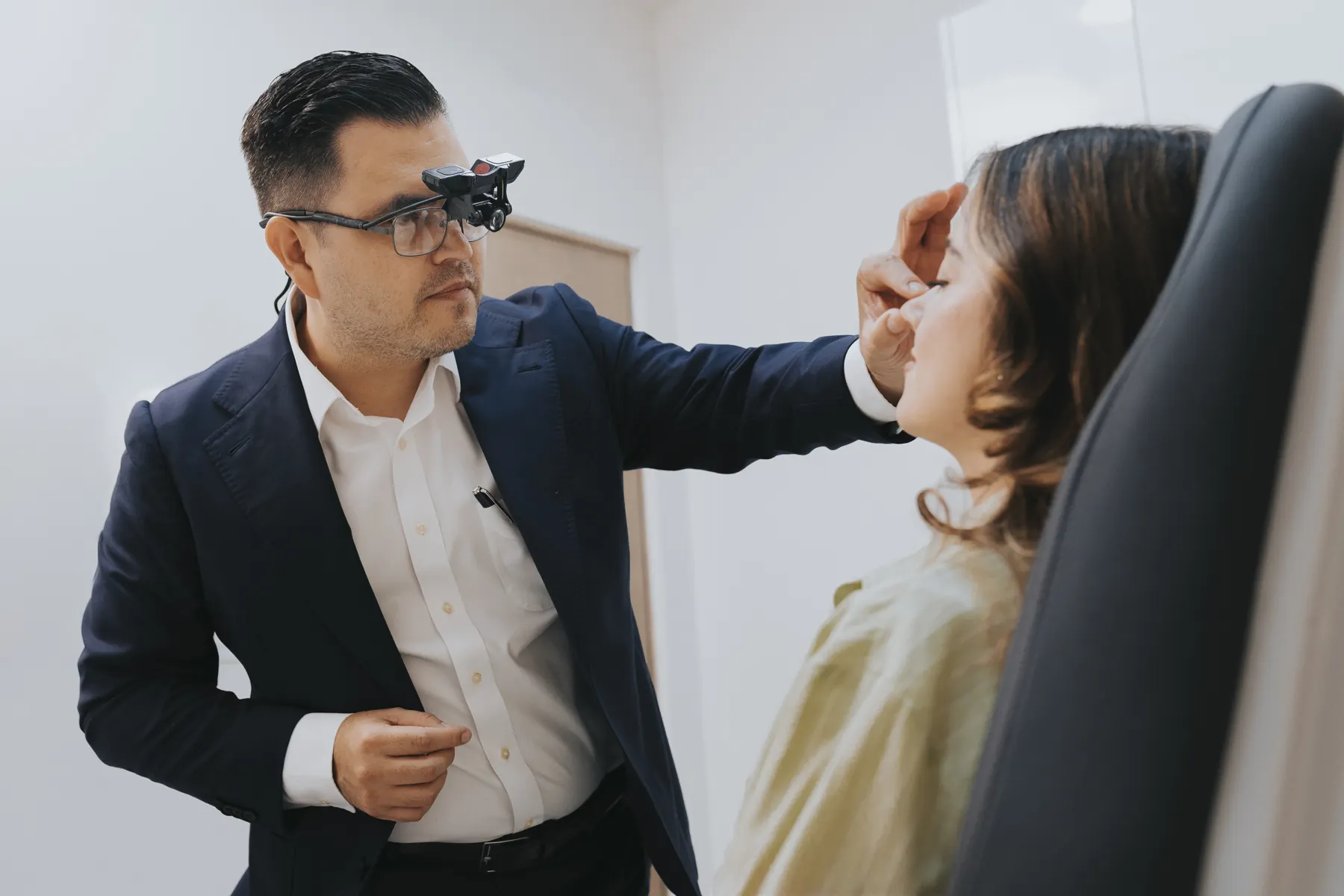
Rhinoplasty changes nasal shape and proportions and may address functional concerns alongside procedures indicated for breathing. Dr. Edgar Santos evaluates the nose in relation to the whole face to develop an individual plan.
Exclusive focus on the face Personalized assessment Care in English and Spanish
A comprehensive approach
A nose is never planned in isolation.
The analysis considers facial proportions, nasal structure, and breathing. Expectations are discussed through an individual assessment.
Technique, instruments, and anesthesia are explained according to the needs of each case.
01
What to consider
Assessment considers facial development, medical history, skin, nasal structures, and expectations. Age alone does not determine candidacy; structural maturity and general health must also be evaluated.
Nasal width and projection.
Tip shape and a hump on the bridge.
Nostril size and proportions.
Asymmetry, injuries, or previous surgery.
Breathing difficulties that require functional assessment.
02
About the procedure
Surgery is adapted to each person's anatomy. A closed approach uses incisions inside the nostrils; an open approach adds an incision across the columella. The surgeon explains which access is appropriate for your structures.
The plan may involve reshaping or repositioning bone and cartilage and using grafts when additional support is needed. Anesthesia, the surgical setting, and risks are discussed before a decision. No single technique is suitable for every patient.
03
Recovering at home
Many procedures are performed on an outpatient basis; the team confirms when it is safe to go home. Arrange for someone to accompany you and follow your individual care instructions and review appointments.
Swelling, bruising, and discomfort may occur. Returning to work or school generally requires an initial rest period, and physical activity may need more time. Splints, dressings, packing, and their removal depend on the technique and individual progress.
04
Long-term results
The nose continues to change as swelling subsides. Some changes are visible in the first weeks, while refinement can continue for months and, in certain cases, a year or longer.
Healing, skin thickness, anatomy, and previous surgery influence progress. Follow-up visits help assess recovery and address questions; a specific result cannot be guaranteed or natural aging stopped.
05
Your consultation
During consultation you can explain your goals, discuss breathing symptoms, and review your medical history. Dr. Santos discusses possibilities, limitations, risks, and follow-up before making a recommendation.
This information supports your consultation and does not replace an individual assessment. Technique, risks, recovery, and results vary from person to person.
Care before surgery
Precision begins before the procedure.
01
Harmony
Your nose in relation to the features that make you unique.
02
Function
An assessment that considers structure and breathing.
03
Planning
A clear conversation about your goals and possibilities.
Let's talk openly.
How is my candidacy determined?+
The consultation allows the doctor to review your medical history, examine your nasal anatomy, and discuss your expectations. Appropriate options are explained based on that assessment.
What does the assessment include?+
A conversation about your goals and a clinical evaluation. The team confirms the details and scope of your consultation when coordinating your appointment.
Does a simulation guarantee the result?+
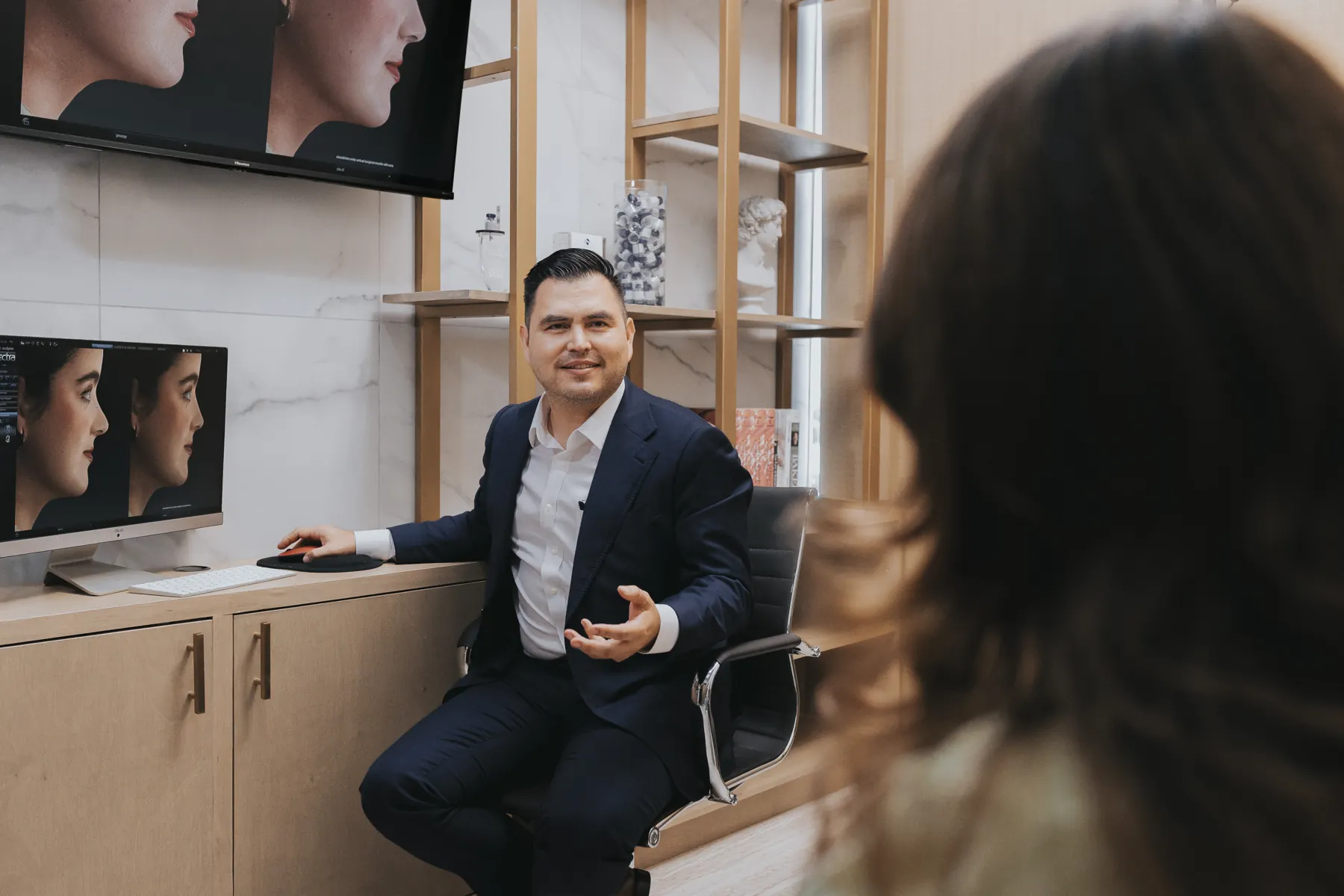
Simulation is a communication and planning tool. Results and recovery vary from person to person and are discussed during the consultation.
Can I consult if I live outside Tijuana?+
The team can explain virtual consultation options and coordinate the in-person assessment needed for your case.
Your first consultation
Your next step, tailored to you.
Begin with a conversation. The team will help coordinate an in-person or virtual assessment.